7 Aug 2026
Seasonal Weather Impacts on Multi-Sport Accumulator Viability Across European Circuits
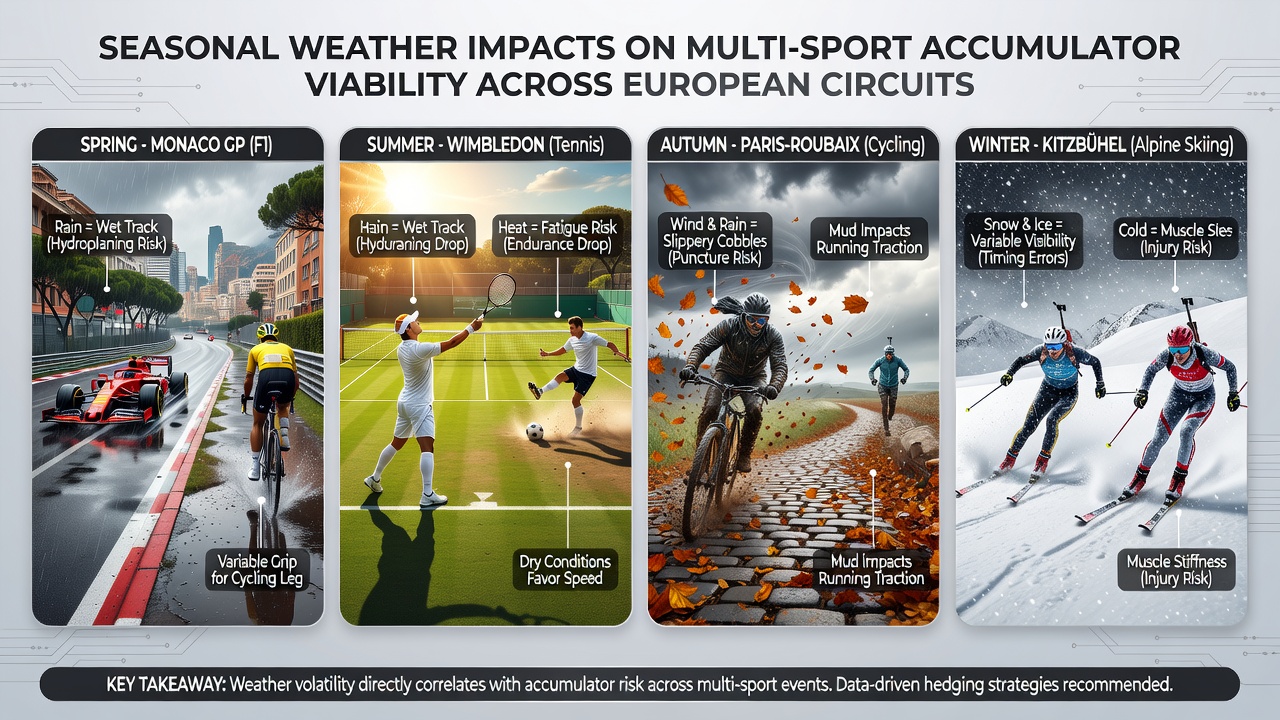
Weather patterns across Europe shift dramatically through the year and these changes directly influence outcomes in football leagues, tennis tournaments, horse racing circuits, and cycling events that form the backbone of multi-sport accumulators. Data from meteorological agencies shows that precipitation levels, temperature swings, and wind speeds alter playing conditions, which in turn affects scoring rates, injury occurrences, and race times that determine bet resolutions.
Winter Conditions and Football Accumulator Adjustments
December through February brings persistent rainfall and cooler temperatures to northern and western European football circuits where pitches often become waterlogged or frozen, leading to slower ball movement and fewer high-scoring matches according to league statistics compiled by national football associations. Accumulators that combine multiple over/under goals selections see reduced viability during these months because defensive setups gain an edge when forward play suffers from slippery surfaces while southern circuits in Spain and Italy experience milder disruptions that keep scoring closer to seasonal averages. Observers note that teams in the Bundesliga adapt with different tactical approaches compared to Serie A sides because heavier snow events remain rare yet impactful when they occur.
Spring Variability Across Tennis and Racing Circuits
March and April introduce fluctuating conditions that affect clay court tennis events in France and Italy along with early horse racing festivals where ground conditions range from heavy to good depending on rainfall distribution. Studies from European sports science institutes indicate that player fatigue rises during extended rallies on slower surfaces while jockey performance metrics shift in response to track moisture levels that change daily. Multi-sport accumulators spanning tennis match winners and race place finishes therefore require recalibration because historical data reveals lower upset frequencies on stable surfaces yet higher variance when sudden showers interrupt play.
Summer Heat and Cycling Grand Tour Dynamics
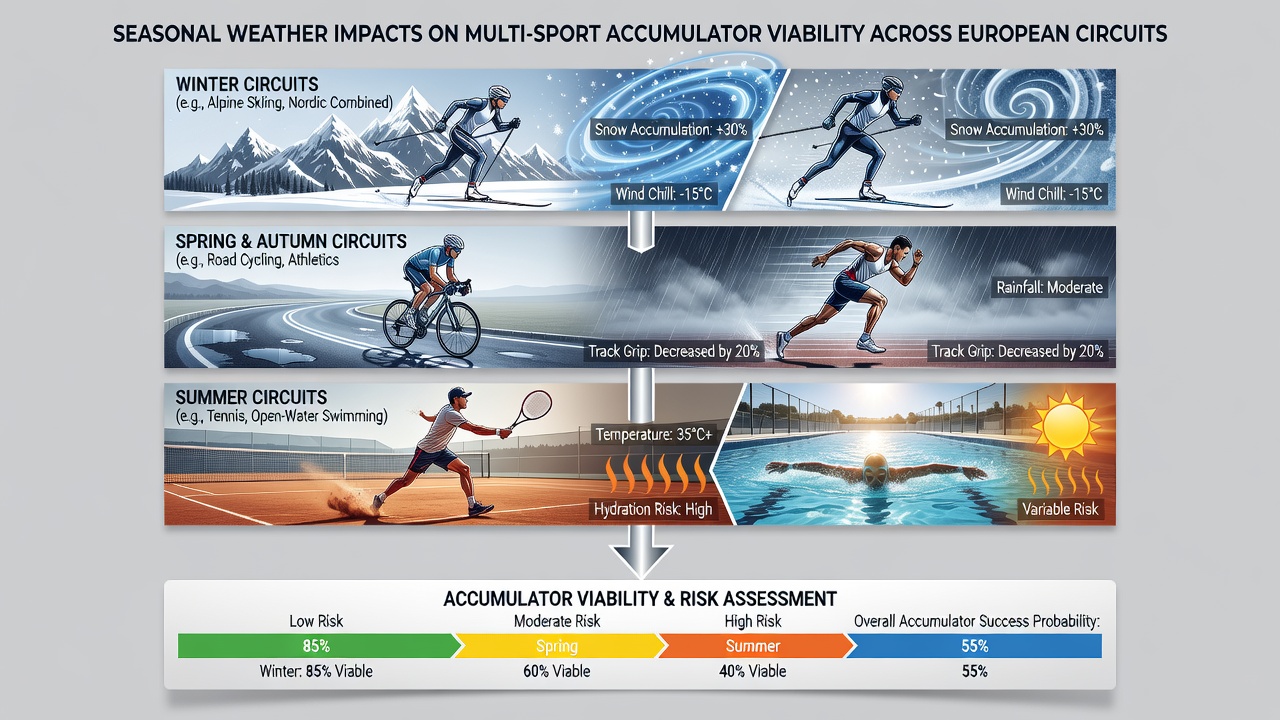
June through August features elevated temperatures that challenge endurance athletes in events such as the Tour de France and associated king of the mountains classifications where dehydration risks climb and average speeds drop on mountain stages. Figures released by the European Environment Agency highlight how heatwaves in 2025 and projected patterns into August 2026 correlate with increased withdrawal rates among competitors, which directly impacts accumulator selections built around stage winners and classification points. Those who monitor these trends find that evening criterium races in urban circuits maintain more consistent outcomes because urban heat islands create predictable thermal profiles compared to exposed alpine routes.
Autumn Storms and Cross-Sport Accumulator Challenges
September and October deliver Atlantic storms that disrupt late-season football fixtures and remaining tennis hard court events across the continent while wind speeds recorded by national weather services frequently exceed thresholds that delay starts or alter ball trajectories. Accumulator builders combining these sports with early winter racing meets encounter compounded uncertainty because storm-related postponements cascade across multiple events and change the underlying probabilities that models rely upon. Research conducted at universities in the Netherlands demonstrates that wind gust data serves as a stronger predictor of outcome shifts than temperature alone during this transitional period.
Regional Differences in Weather Data Integration
Northern circuits experience more pronounced winter impacts than Mediterranean ones according to comparative analyses published in sports climatology journals and this geographic split forces accumulator strategies to diversify across leagues rather than concentrate selections in one area. Eastern European venues add another layer because continental high-pressure systems create drier conditions that favor higher scoring outputs in football while simultaneously affecting tennis ball bounce characteristics on indoor versus outdoor courts. Data compiled by international sports federations shows that successful multi-sport combinations often incorporate at least one southern venue to offset northern weather volatility during peak accumulator windows.
Conclusion
Seasonal weather patterns create measurable shifts in event outcomes across European multi-sport circuits and these shifts influence the statistical foundations of accumulator viability throughout the calendar year. Tracking precipitation, temperature, and wind metrics from authoritative sources allows for informed adjustments to selection criteria while regional variations require ongoing attention to maintain balanced risk profiles. As August 2026 approaches, updated climate projections continue to inform how heat and storm frequency may further modify the parameters that determine accumulator construction across these circuits.