19 Jul 2026
Altitude Effects on Scoring Trends in Andean Football Competitions and Their Impact on Multi-Bet Structures
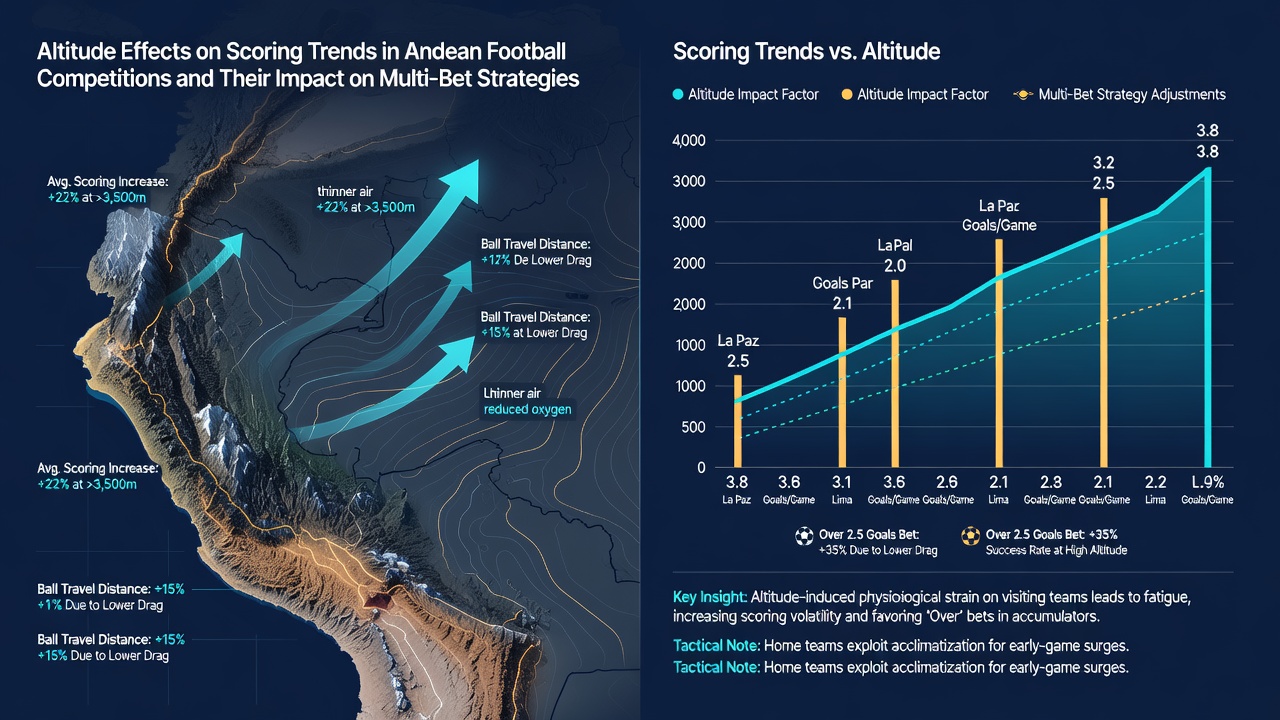
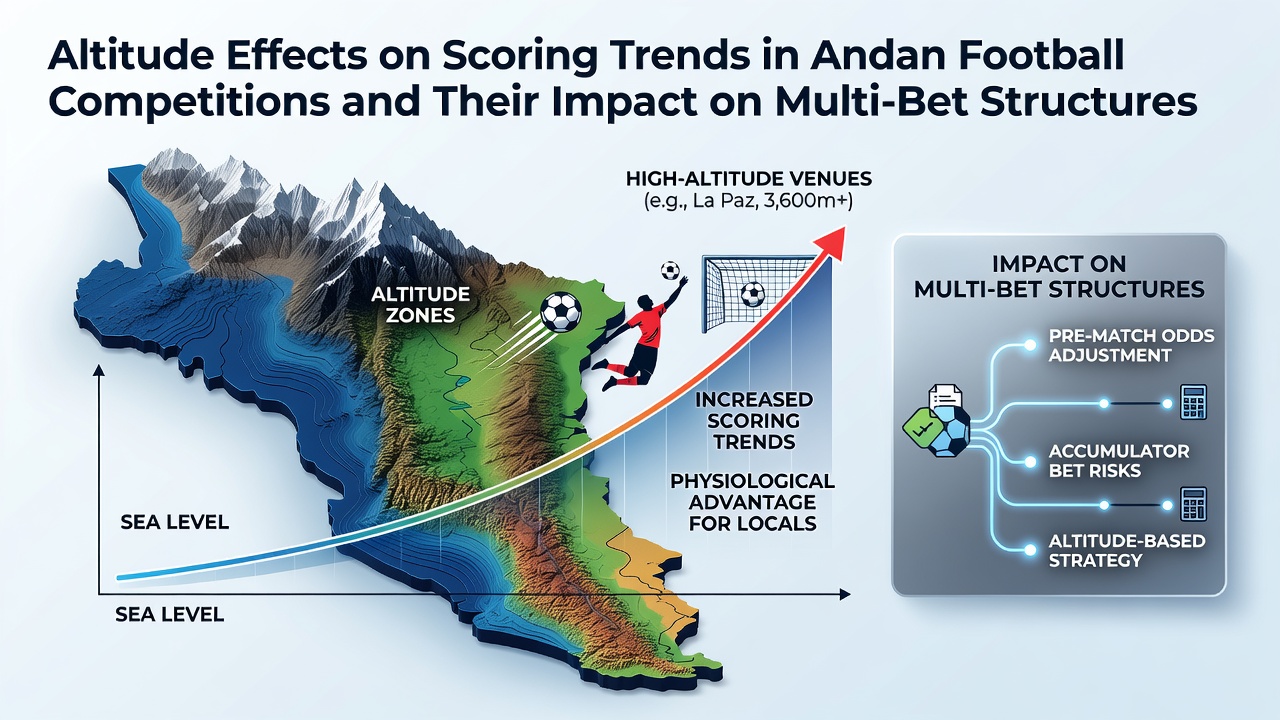 Observers note that Andean football competitions unfold at elevations ranging from 2500 to 3600 meters above sea level, and data from CONMEBOL archives reveal consistent patterns in goal production when teams travel between lowlands and highlands. Teams based in La Paz and Quito maintain home records that feature elevated scoring margins compared with matches at sea level, while visiting squads from coastal regions encounter measurable declines in sprint frequency and recovery times between plays. Studies conducted by the University of Buenos Aires sports science department tracked heart rate variability and oxygen saturation levels during 2024 and 2025 seasons, showing that acclimatization periods of less than seven days correlate with reduced total distance covered by away players. Bolivian Primera División fixtures illustrate these dynamics clearly. Home sides at Estadio Hernando Siles record average goal tallies of 3.4 per match across the 2025 campaign, whereas the same clubs on the road post averages of 2.1 goals per game. Peruvian and Ecuadorian leagues display parallel shifts, although the magnitude varies with exact altitude differences. Ball flight characteristics change in thinner air, allowing longer passes and shots that travel farther before dipping, and match statistics compiled by regional federations confirm an uptick in long-range attempts that convert at higher rates than observed in lowland venues. Multi-bet structures in accumulator formats incorporate these altitude variables through adjusted over-under lines and handicap thresholds. Operators recalibrate expected goal totals upward for highland venues when one side enjoys prolonged residency at elevation, and downward when both teams arrive from lower altitudes without adequate preparation time. Historical datasets spanning 2018 through early 2026 indicate that accumulators built solely on total goals markets from Andean fixtures yield different payout distributions compared with equivalent bets drawn from European or Asian leagues.
Physiological and Tactical Adjustments at Elevation
Players experience reduced aerobic capacity once oxygen partial pressure drops, and teams that rotate squads strategically during highland campaigns maintain fresher legs for the final twenty minutes of matches. Research from the Chilean Institute of Sports Medicine documented that pre-match hydration protocols and specific breathing exercises mitigate some performance drops, yet the underlying physiological stress remains evident in post-match lactate measurements. Coaches adjust formations toward compact defensive blocks that limit transitions, which in turn compresses scoring windows and produces matches with fewer but higher-quality chances.
Referees working at altitude issue fewer cards for reckless challenges because fatigue reduces the intensity of challenges overall, and disciplinary data from 2026 Copa Sudamericana group stages support this observation. Set-piece conversion rates rise slightly because delivery accuracy suffers less from wind effects at elevation, giving teams that emphasize dead-ball routines a measurable edge in multi-leg betting sequences.
Betting Market Responses and Accumulator Construction
Betting platforms update their models weekly using live altitude-adjusted statistics, and lines for July 2026 fixtures already reflect updated baselines drawn from the previous six months of league play. Accumulator builders combine highland over-2.5 goals selections with lowland under-2.5 goals selections to balance variance across a slip. When two high-altitude matches appear on the same card, operators widen the margin on Asian handicap lines to account for the amplified home advantage observed in those environments.
Statistical services that aggregate CONMEBOL and national federation data feed directly into pricing engines, allowing real-time recalibration when travel schedules change or when a visiting squad announces an abbreviated acclimatization window. Those adjustments propagate through multi-bet structures because each leg influences the overall odds multiplier and the implied probability distribution of the entire accumulator.
Comparative Data Across Competitions
Matches between two highland sides produce goal distributions closer to sea-level norms, while fixtures pitting a highland home team against a lowland visitor generate the widest spread in total goals. Copa Libertadores knockout ties that return legs at altitude demonstrate pronounced second-leg scoring spikes when the first leg occurred at lower elevation. League tables from 2025 and the opening half of 2026 list clubs with permanent highland bases at the top of both goals-scored and points-earned columns, underscoring the structural advantage embedded in venue location.
Conclusion
Altitude remains a quantifiable factor that shapes scoring distributions in Andean competitions and directly informs the construction parameters of multi-bet products. Data accumulated through mid-2026 continue to demonstrate that elevation differentials produce measurable deviations from baseline goal expectations, and market operators respond by embedding those deviations into handicap and totals lines. Continued collection of physiological and match-event data will refine these models further as leagues complete additional seasons at varying elevations.